
Slow Cooker Stewed Apples for Gut Health in Perimenopause
There are a handful of foods I make almost every week because they make nourishing myself well feel effortless, and these stewed apples have become one of them.
A big batch goes into my slow cooker with cinnamon and a splash of water, and a few hours later I have soft, naturally sweet apples ready to spoon over my morning muesli, chia pudding, yogurt, or simply eat warm from a bowl.
But the real reason I keep making them? Apples are naturally rich in pectin, a type of soluble fiber that can be fermented by beneficial bacteria in the gut. And during perimenopause, when I’m thinking about supporting digestion, regularity, the gut microbiome, and healthy estrogen metabolism, finding simple ways to eat a wider variety of fiber-rich plant foods is something I come back to again and again.
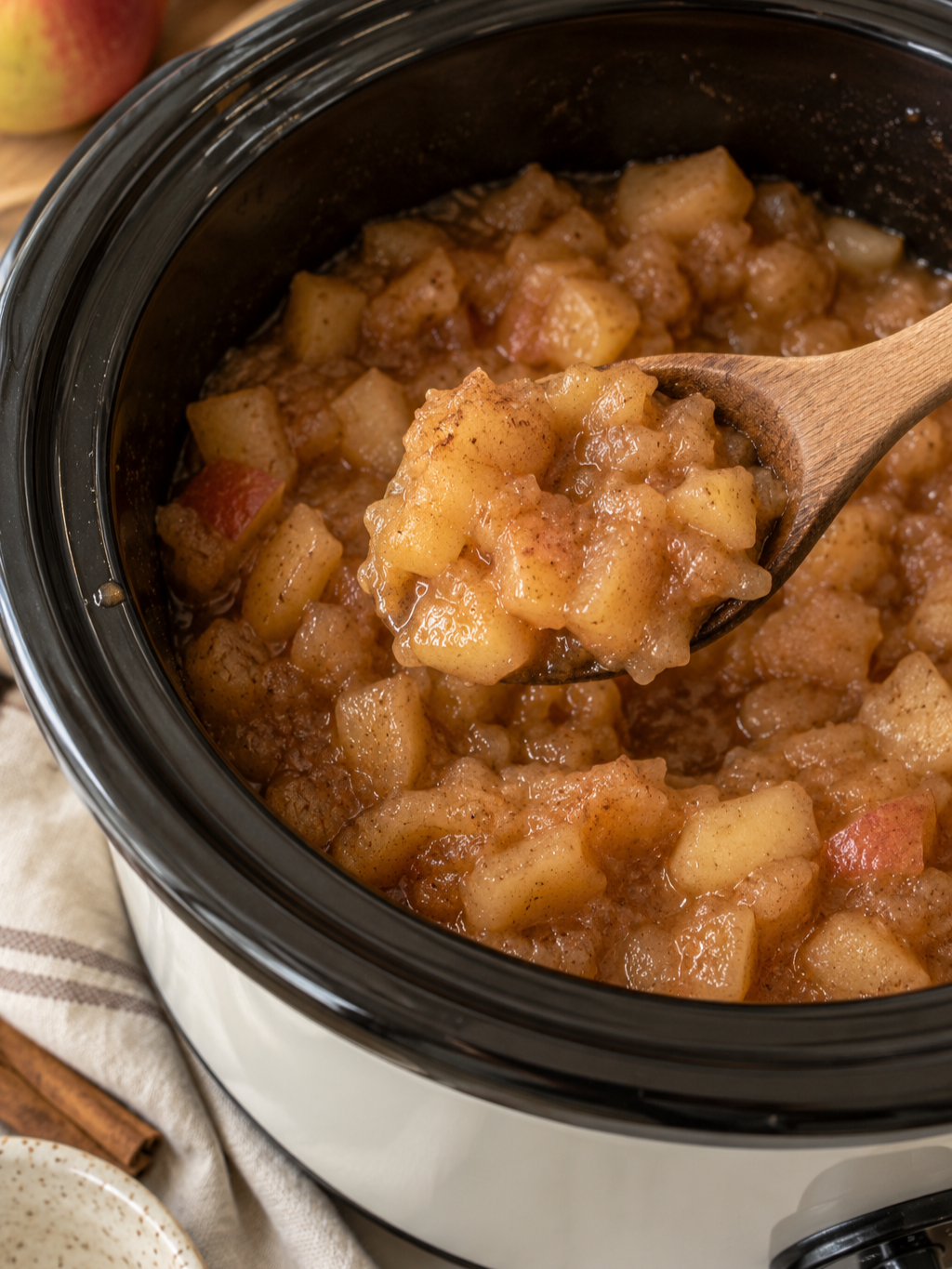
Stewed Apples for Gut Health in Perimenopause
Why Stewed Apples Have Become a Staple in My Kitchen
I’m always looking for those little things I can prep once and use all week. Not another complicated wellness routine. Not something that requires twelve ingredients. Just real food that makes the next meal easier.
That’s exactly what these apples are for me.
I’ll make a large batch on the weekend, tuck them into a glass container in the refrigerator, and throughout the week they become an easy way to add fruit and fiber to breakfast.
Lately, one of my favorite combinations has been my homemade muesli porridge topped with a generous spoonful of these apples. The oats, nuts, seeds, chia, and apples give me a beautiful variety of plant foods and fibers in one simple bowl.
And honestly, they make the whole kitchen smell like fall while they're cooking—which is reason enough to make them.
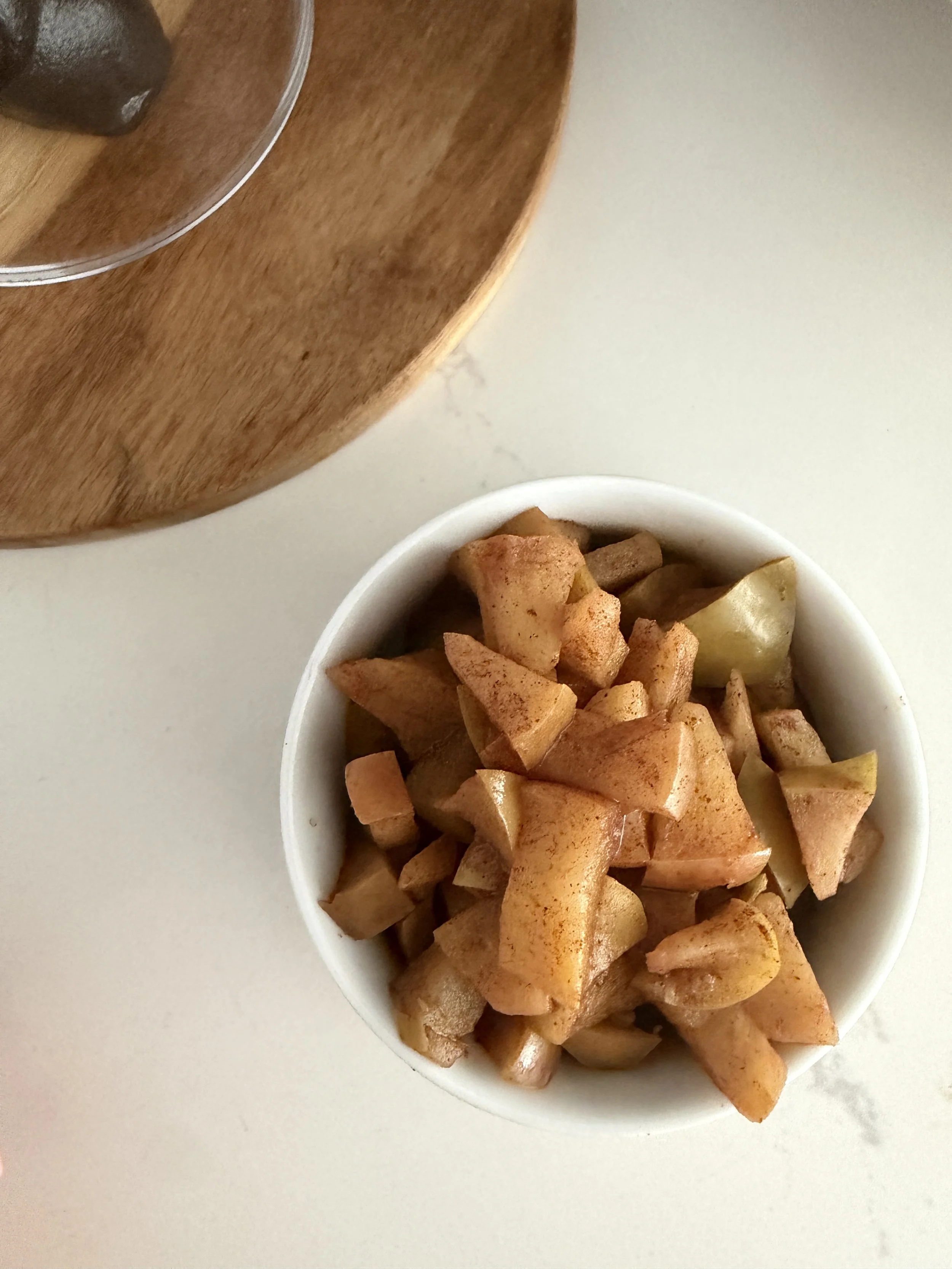
Slow Cooker Stewed Apples
Why I Love Stewed Apples for Perimenopause
One thing I talk about often is that supporting our hormones isn't only about the hormones themselves.
Gut health matters, too.
And during perimenopause, we can start to notice that connection in ways we may not immediately associate with our gut.
Bloating that seems to come out of nowhere. Constipation or changes in regularity. More brain fog. Feeling anxious or irritable. Low energy, cravings, and even changes in how well we tolerate certain foods.
Of course, these symptoms can have many causes during perimenopause, and gut health isn't the only piece of the puzzle. But our gut microbiome communicates with and influences systems involved in digestion, immune function, metabolism, the gut-brain axis, and estrogen metabolism, which is why supporting it is one of the foundations I keep coming back to.
Apples, particularly with their skins left on, provide several types of fiber, including pectin, a soluble fiber that can be fermented by microbes in the colon. When certain fibers are fermented, gut bacteria produce short-chain fatty acids that help support the intestinal environment.
And then there's something especially interesting for us in perimenopause: the estrobolome.
The estrobolome refers to the collection of gut microbial genes involved in estrogen metabolism. Our gut doesn't simply “balance our hormones,” but the microbiome is one part of how estrogen is metabolized and recirculated in the body.
So when I'm supporting my gut during perimenopause, I'm thinking bigger than simply avoiding bloating.
I'm thinking about regularity, estrogen metabolism, blood sugar and metabolic health, inflammation, and the gut-brain connection that can influence how we feel from day to day.
And one of the most practical ways we can support a healthy, diverse microbial community?
Feed those good gut bugs.
That means regularly eating a variety of fiber-rich plant foods that provide the substrates beneficial microbes use, and these stewed apples are one incredibly simple way I do that.
They're not a magic hormone food or a cure for perimenopause symptoms. They're simply one small, repeatable habit that helps me build a more gut-supportive diet.
ROOTED TIP:
Keep the skins on.
A lot of the fiber and beneficial plant compounds in an apple are concentrated in or near the peel, so I simply wash my apples well, chop them, and put the entire thing into the slow cooker.
I also don't add sugar. As the apples slowly cook down, their natural sweetness becomes more pronounced and they develop that cozy, almost applesauce-like texture all on their own.
Make a batch once, and you've given yourself an easy gut-supportive topping for the entire week.
FROM MY KITCHEN
Watch Me Make These Slow Cooker Stewed Apples
See just how simple it is to prep a batch of these cinnamon stewed apples for the week.
What You'll Need
One of the things I love most about this recipe is how little you need to make it. Just a few simple ingredients and your slow cooker do all the work.
For the apples:
8–10 apples — Honeycrisp, Fuji, Gala, or a combination
Ground cinnamon
Water
From your kitchen:
Slow cooker
Cutting board
Sharp knife
Wooden spoon
Glass storage container with a lid
Optional: An apple corer can make prepping a large batch a little quicker, but you definitely don't need one.
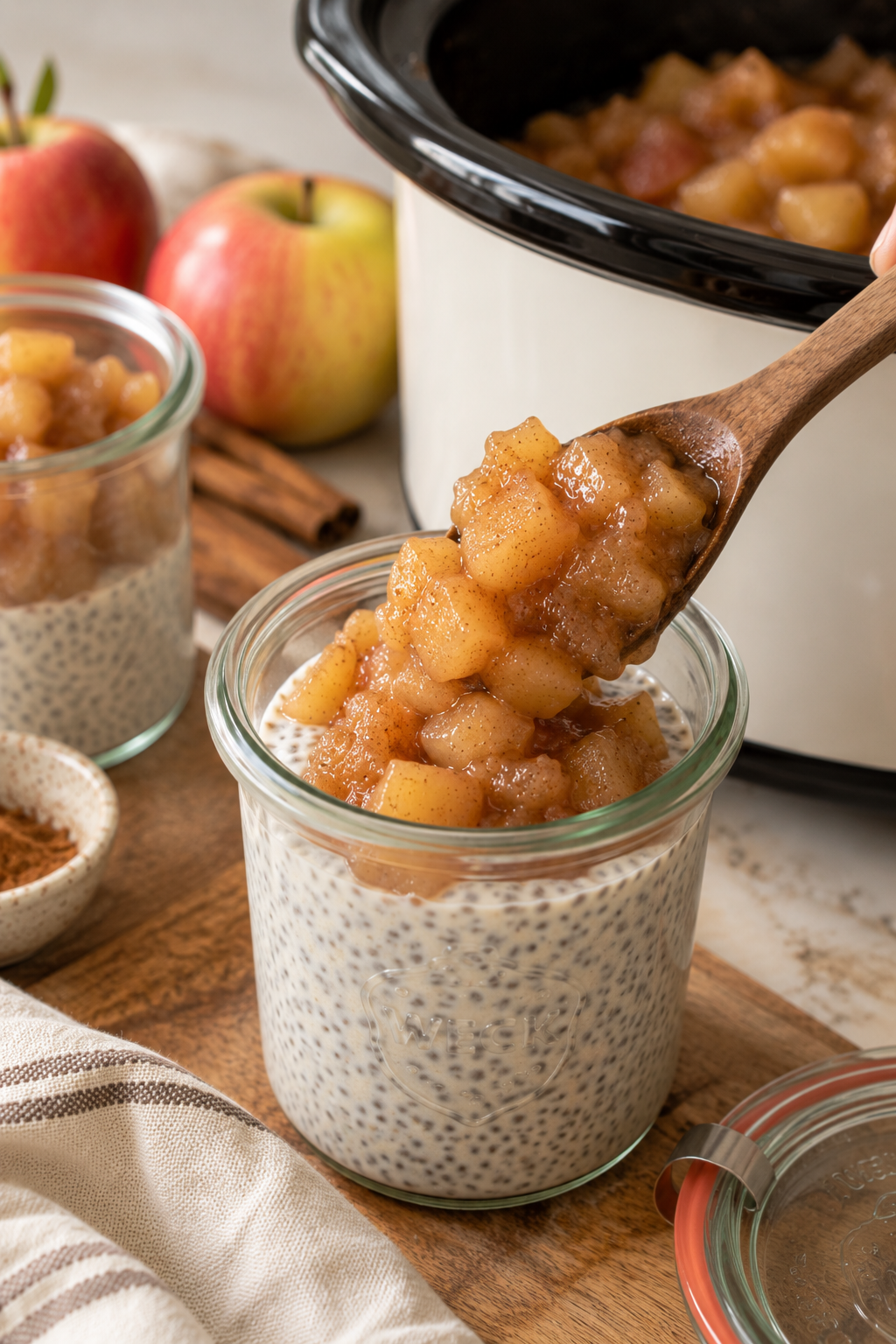
Chia Seed Pudding Topped with Stewed Apples
A few reasons I keep them in my weekly rotation:
Apples provide soluble and insoluble fiber, particularly when the skin is left on.
Their pectin provides fermentable fiber for the gut microbiome.
Fiber helps support normal bowel regularity, an important part of normal elimination.
Pairing the apples with protein, healthy fat, nuts, seeds, yogurt, chia, or a balanced breakfast can make them part of a more blood-sugar-friendly meal.
They make adding more plant diversity to breakfast incredibly easy.
Slow Cooker Stewed Apples
Soft, cinnamon-spiced apples slowly cooked until naturally sweet and saucy. An easy batch-prep staple for adding more pectin-rich fruit and fiber to breakfasts throughout the week.
10 minutes
3–4 hours
Approx. 8
Ingredients
- 8–10 medium apples, washed and chopped, skins left on
- 1–2 teaspoons ground cinnamon
- ¼ cup water
Honeycrisp, Fuji, and Gala work beautifully. You can also combine varieties for a little more depth of flavor.
Instructions
- Wash the apples well. Core and chop them into bite-sized pieces, leaving the skins on.
- Add the chopped apples to your slow cooker.
- Sprinkle with 1–2 teaspoons cinnamon, depending on how cinnamon-forward you like them.
- Pour ¼ cup water over the apples.
- Cover and cook on HIGH for 3–4 hours, stirring once or twice if possible.
- The apples are ready when they are very soft and have released their juices, creating a naturally saucy consistency.
- Stir gently. Leave them chunky, or lightly mash some of the apples with the back of a spoon for a softer texture.
- Allow to cool before transferring to a glass storage container.
Keep the skins on. Apple skins contribute fiber and beneficial plant compounds, while slow cooking gives the apples a wonderfully soft texture without the need for added sugar.
Storage
Store cooled stewed apples in a covered glass container in the refrigerator for up to 5–7 days. Enjoy them cold or gently reheated.
Make It Your Own
More warming: Add a pinch of nutmeg, ginger, or cardamom.
More tart: Replace a few of the sweeter apples with Granny Smith.
Chunkier: Chop the apples slightly larger and stir less frequently.
More applesauce-like: Cook toward the longer end of the range and gently mash before storing.
My Favorite Ways to Use Them
Spoon them over warm muesli or oatmeal, chia pudding, plain Greek yogurt, or alongside a balanced breakfast. They're also lovely warmed and topped with chopped walnuts or pumpkin seeds.
Did You Make This Recipe?
If you make these Slow Cooker Stewed Apples, I'd love to know how you're using them in your kitchen.
Leave a comment below and tell me what you paired them with, or tag Rooted Home Wellness when you share your bowl. 🤍
More in The Nourishment Journal
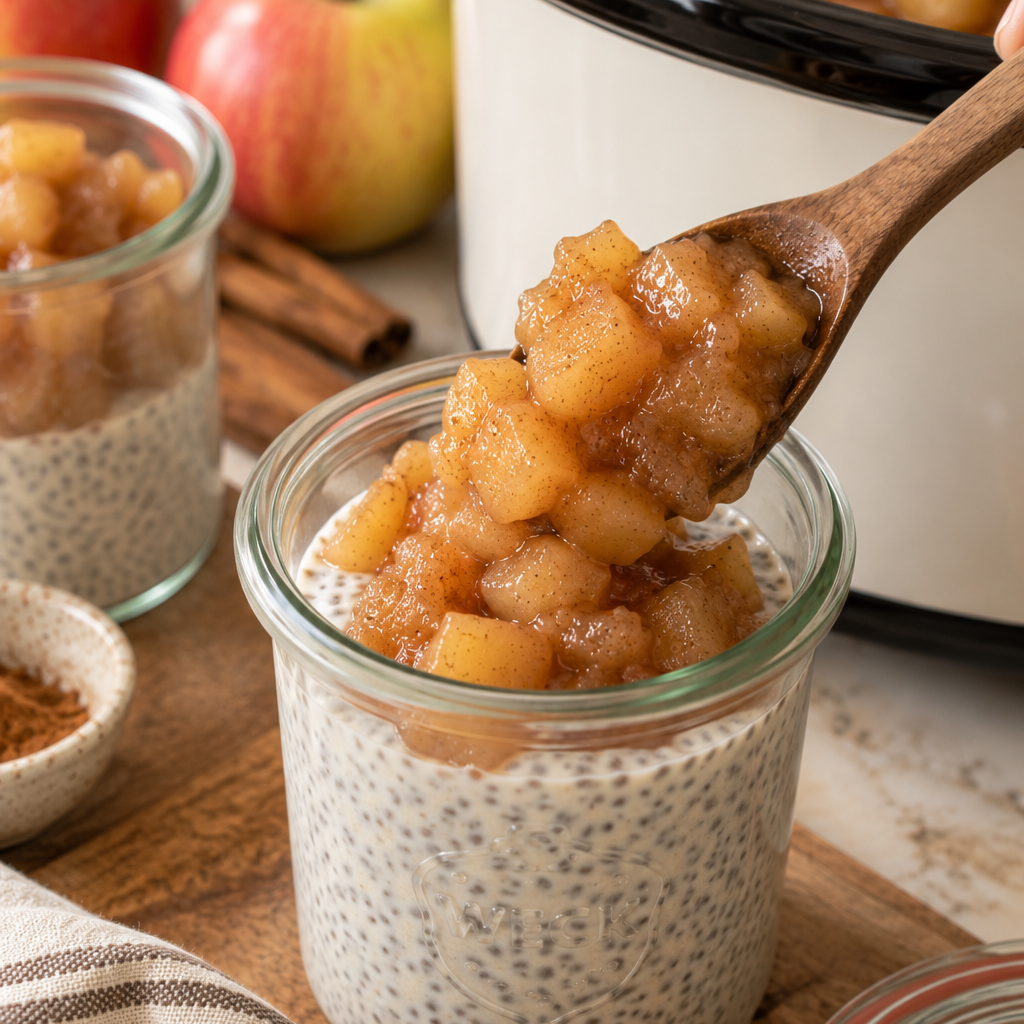

Blueberry Chia Seed Pudding for your perimenopause diet